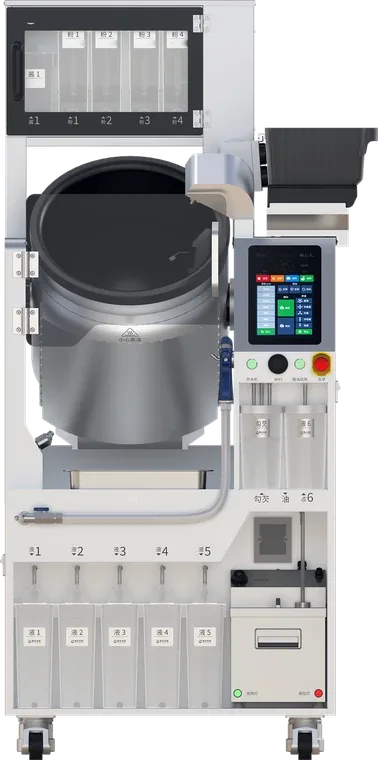
Commercial kitchen automation: choosing a cooking robot
Three supplier sites make the same loading and heat claims. What separates machines is batch weight, power, footprint and a trial on your own dishes.
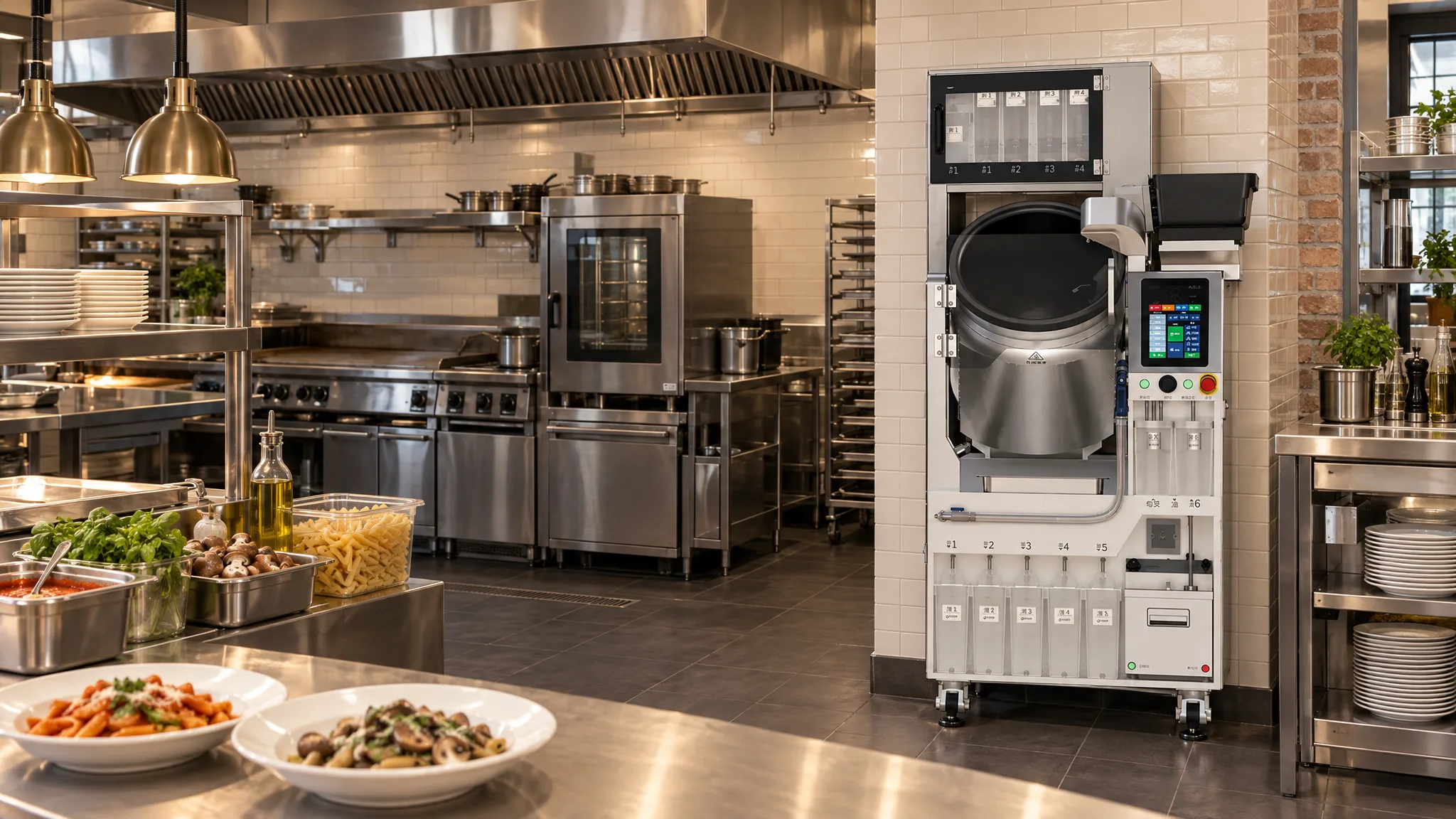
Commercial kitchen automation is sold with a short list of promises, and the list is nearly the same on every supplier's site. Reading the sites of three direct suppliers while preparing this article — UTCook, Xin Chushi and Xianglu — automated ingredient loading, temperature control, cloud recipes and labour saving turned up on all three, each in its own words. None of those claims is wrong. The trouble is that none of them tells you which machine can cook your dishes, at your batch, in your room.
Our view is that a cooking robot should be chosen on three things your kitchen can produce before you talk to anyone: the weight you cook in one cycle against the weight one service asks for, the room and power the machine needs, and whether a recipe can run — loading, seasoning, heat, wash — without a hand on the wok. A trial on your own dishes settles what the numbers cannot. That is the order below.
Why do the supplier sites all say the same thing?
Because those four capabilities are what a commercial cooking robot is now expected to have. A buyer who checks only that list has learned that the suppliers agree with each other, which is not the same as learning which machine suits a kitchen.
What differs is what the machine is allowed to do on its own, at what batch, inside what footprint, and what evidence a supplier will show you. Those four questions have answers, and none of them needs an adjective.
Where should commercial kitchen automation start in your kitchen?
At the station that runs every service and depends on one person's hands. Usually that is the wok line: the two or three dishes that go out all night and taste different whenever a particular cook is off. A machine there changes your dependence on a person. A machine on a dish ordered twice a week changes very little.
The ceiling to check first is batch weight per cycle, which is a fixed limit rather than a target. Our nine models run from a compact unit at 1 kg per cycle, through 0.3–2.0 kg, 0.5–4 kg and a 4 kg maximum, to a 7–30 kg machine, a 30 kg gas unit and a 100 kg gas unit; each figure is the per-cycle capacity we publish for that model. The steps are not interchangeable: a kitchen that serves by the portion and a canteen filling trays sit at different points on that ladder, and picking the nearest step rather than the right one is how a machine ends up either idle or overloaded.
The number that decides more than the rest is what your busiest service asks for. A 4 kg cycle is 4 kg whether the room is quiet or full, so if one service needs more than a cycle carries, the answer is a second cycle, a larger model or a second machine — and your own order data says which. Bring that data to the first conversation; it shortens a shortlist faster than any feature comparison.
What does the machine need from the room and the power supply?
More than a counter. Take our mid-size induction model, the TC-40EA: 775 mm wide, 920 mm deep, 1,740 mm tall, 130 kg, drawing 15 kW on a 380 VAC ±10% supply at 50/60 Hz. That means a floor that carries the weight, a supply that carries the load, and clearance for a person to load, plate and clean beside it.
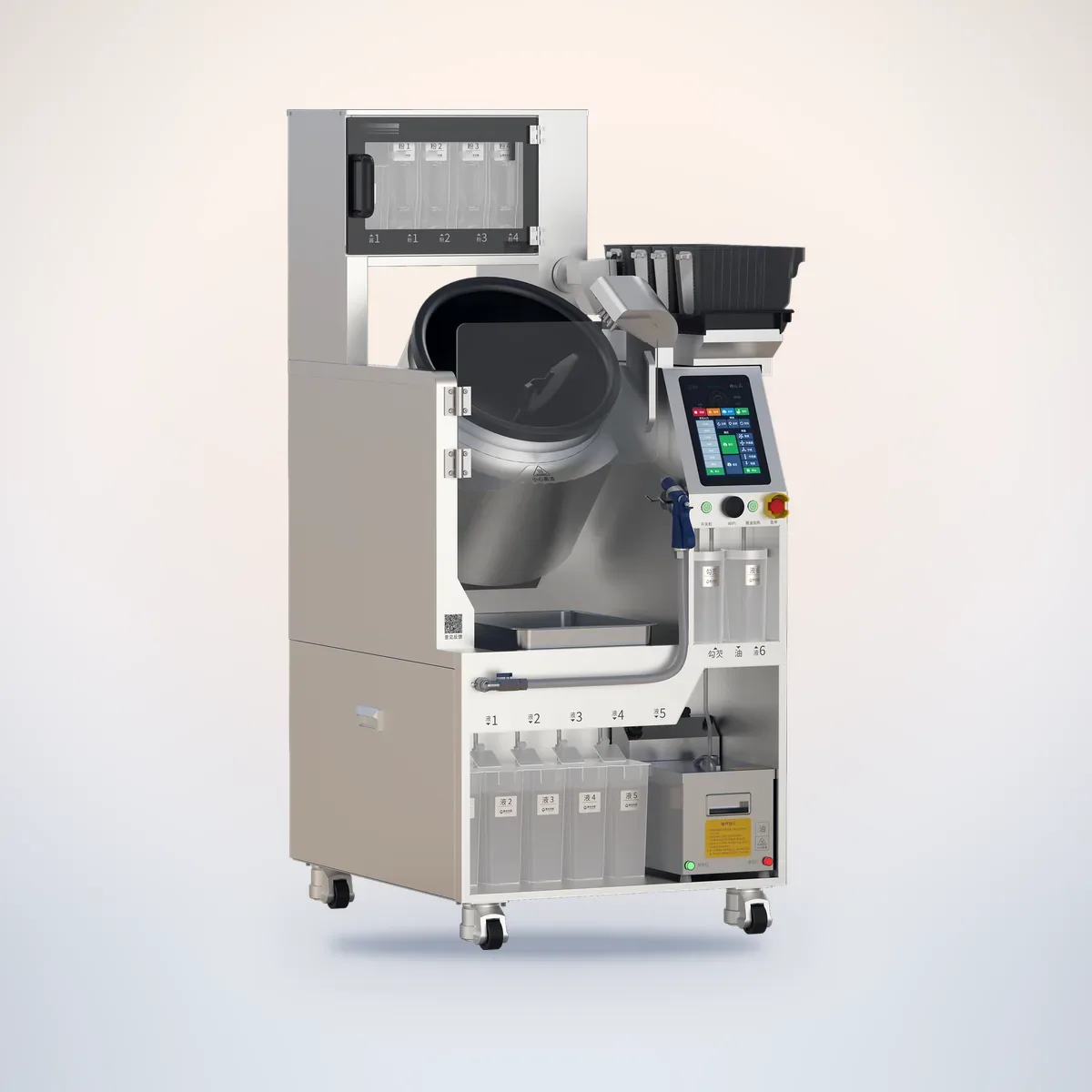
Measure the route from the door to the position, not only the position: the machine has to reach the spot, not just fit in it. Then have a qualified electrician confirm the supply and the connection point before you order, because whether a machine can be connected where you planned it is a question for the installation rather than the brochure.
It is worth planning the machine together with the rest of the line as well: a cooking robot that finishes a dish into a pass where nobody is plating has moved the queue rather than shortened it. Our chain-restaurant page follows one store's day from calling up a recipe through cooking to washing the wok after service.
How do you test a machine before you buy it?
Cook your own dishes, in the batch you sell, with your own ingredients, and time the whole cycle including the wash. A demonstration is the supplier's best case; a trial is your normal case, and only the second one tells you anything.
- Pick four or five dishes you actually sell: a signature stir-fry, a vegetable, a protein, a sauce-heavy dish, and a western dish if your menu has one.
- Bring your own prepped ingredients, cut the way your kitchen cuts them, and state the weight going in.
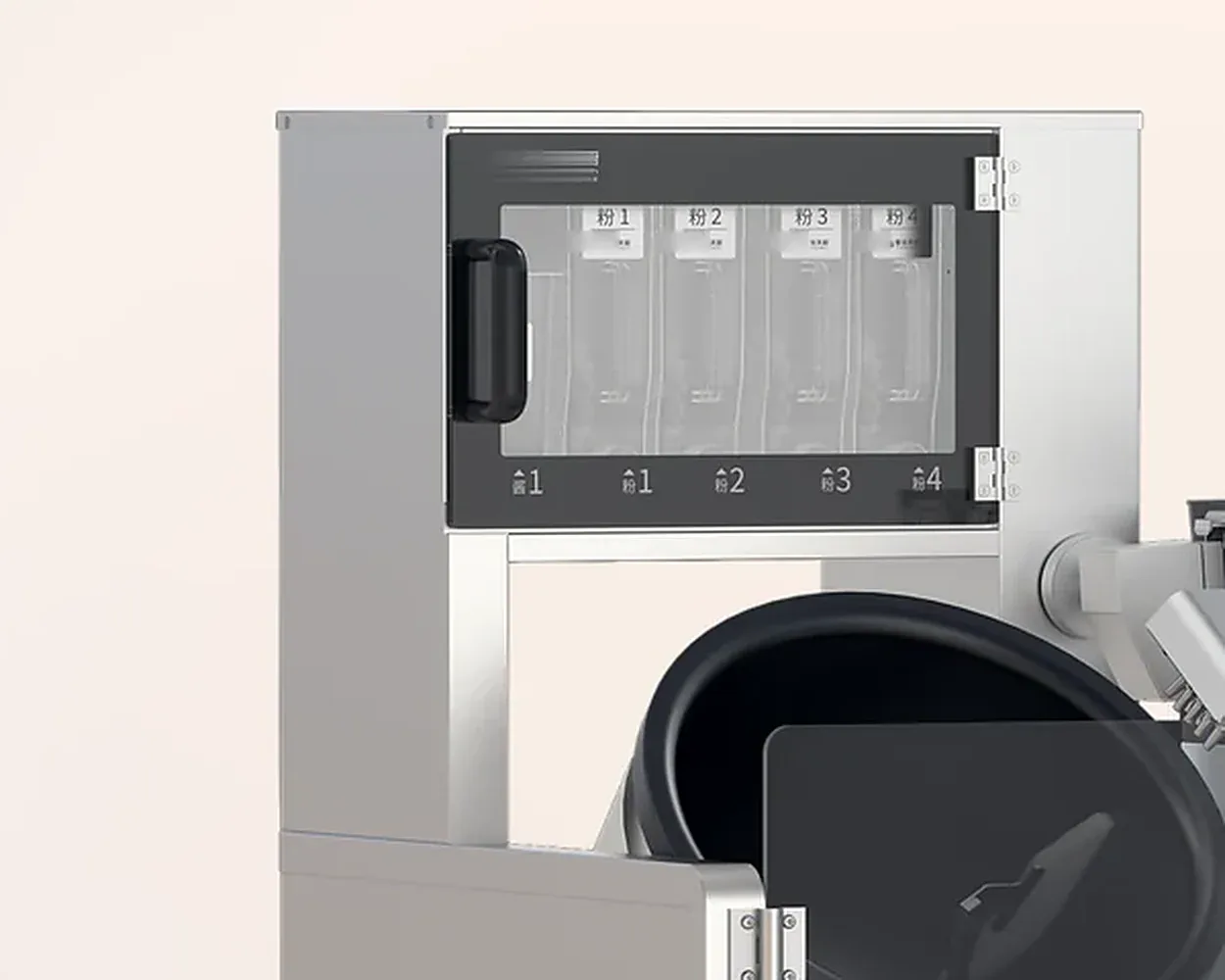
- Watch what happens without help. On the TC-40EA that means ingredients dropped automatically, seasoning from four solid and eight liquid channels, and a wok that reaches 250 °C; if somebody has to stand there adding by hand, count that person against the labour the machine was meant to free.
- Cook the batch you serve, not a small demonstration portion.
- Run the wash and time it, and note who does what.
- Taste against the dish you cooked that morning and write down the difference instead of deciding on the spot.
One tasting is not a benchmark. A machine that performs on a single dish has proved one recipe, not a menu, and the useful question after a trial is which of your dishes failed and why — because that is what shapes the recipe work after installation.
Which questions sort one supplier from another?
Ask about evidence rather than features. Five questions do most of the work:
- Which dishes has this model cooked, at what batch weight, and can I speak to the kitchen that used it? A client logo is not a reference; a name you can call is.
- If you show a conformity mark, which model numbers does the document cover, and until when? A mark on a brochure page is a statement about a document, not proof about the machine you are buying.
- What is included in installation, training and the first service visit, and what is charged separately?
- What happens mid-service if the machine stops: who answers, and what can the kitchen do meanwhile?
- Do you publish output or payback figures, and under what conditions? A figure earned in another kitchen carries only as far as its configuration — the meal count, the staffing before and after, the service window — and a number without those conditions reads as a sales line rather than a planning figure.
What should you send before a cooking trial?
Your dish list, the batch weight you serve, and a photograph of the space showing the wall the machine will stand against and the route in from the door. With those three we can narrow the range to two or three models worth testing, and the trial decides between them.
If you are not yet sure a cooking robot belongs in your kitchen at all, send the same three things. Comparing your batch weights with the model capacities on our product pages is a short conversation, and it is a cheaper way to learn that your volumes sit at the small end of the range than to book a demonstration you did not need.